Denmark: A Growing Market for Wines from Eastern Europe.

Denmark’s open wine market and curious consumers make it a great place for wines from both well-known and lesser-known regions. While wines from France, Italy, and Spain are still popular, there is a rising interest in wines from Eastern Europe, including countries like Hungary, Georgia, Slovenia, Romania, and Bulgaria. These regions offer unique grape varieties like Hungary’s Furmint, Georgia’s Saperavi, and Romania’s Fetească Neagră, which bring new and exciting flavours to Danish wine lovers.

Eastern European wines are special because they combine old traditions with new, innovative methods. For example, Georgia’s ancient winemaking style using clay vessels called Qvevri adds a sense of history and uniqueness. Danish consumers, who enjoy trying natural and organic wines, also appreciate that many Eastern European producers focus on sustainable and low-intervention practices.
These wines offer excellent quality and making them attractive. Danish wine shops, restaurants, and wine bars, especially in cities like Copenhagen, are starting to showcase these wines, giving them more attention. Importers in Denmark help bring these hidden gems to the market, giving smaller producers a chance to succeed.
With Denmark’s central location, it also acts as a gateway to the Nordic region, helping Eastern European wines reach neighbouring markets like Sweden and Norway. This growing interest in Eastern European wines shows how Denmark values diversity, quality, and exciting new choices.

Southeast Asia’s emerging wine market.

In Southeast Asia, more people are drinking wine as their incomes grow and they become interested in global trends.

In Thailand, cities like Bangkok and Chiang Mai are seeing more wine bars and fancy restaurants.
In the Philippines, wine is becoming popular in cities, with new wine shops and online stores making it easy to buy.
In Vietnam, the growing middle class is enjoying wine as a mark of sophistication, and there are more wine shops and international options available.
In Indonesia, people, especially in cities like Jakarta and Bali, are starting to show more interest in wine. Growing tourism increases the wine consumption as well.
Malaysia is also seeing a rise in wine drinking, thanks to more high-end restaurants and wine clubs.
Singapore is a major center for wine in the region, with many international wines and wine events.
Even in Cambodia and Laos, urban areas are beginning to embrace wine. Overall, Southeast Asia is seeing a big increase in wine drinking as more people explore and enjoy it.
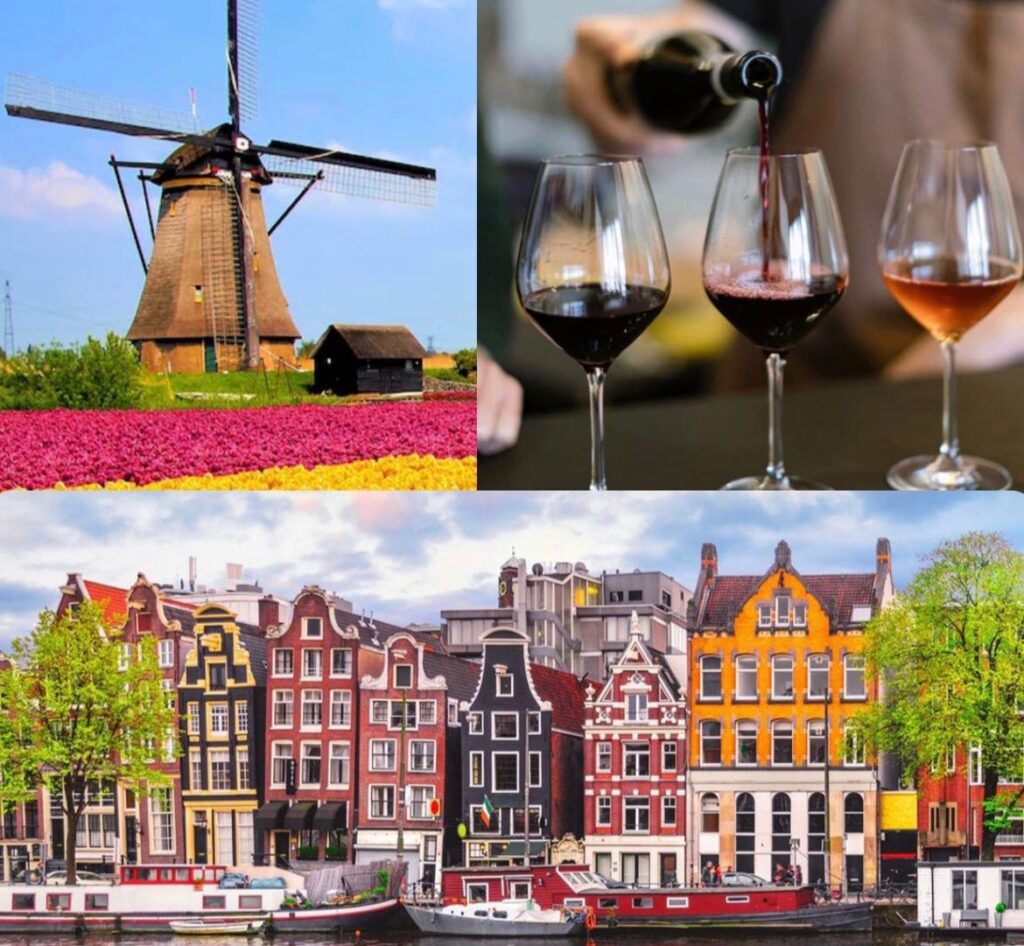
Why is the Netherlands an attractive Wine Market?

The Netherlands is a great place to sell wine because the people are curious and open to trying new wines from around the world. Its central location in Europe makes it easy for wine importers to bring in and distribute wines to other countries. Dutch people enjoy good food and drink, so there are many restaurants, bars, and wine shops looking for interesting wines.

Online wine shopping is becoming more popular, which means more opportunities for sales. The Netherlands also has good trade policies that make it easy for wine importers to do business. Organic and sustainable wines are becoming more popular because Dutch consumers care about health and the environment. The market is also very diverse, offering opportunities for both affordable everyday wines and premium, high-end bottles. With a strong economy and a stable consumer base, the Netherlands continues to be a reliable market for wine importers and distributors.